So long, Nightshades

For as long as I can remember, I’ve had digestive issues. I’ve gone through every diagnostic test available, tried every OTC and prescription medication possible and not one thing has helped. Where does that leave me? Food (because what else is there and why didn’t I realize all this sooner? Aaahhh well.).

I’m getting more and more into Practical Paleo by Diane Sanfilippo, which might be the best book ever. Her approach to healing through food is absolutely fascinating. The book is extremely user-friendly and not overwhelming at all (P.S. I’m attending her workshop with a friend here in San Diego, this coming Sunday and I am beside myself!).

Anyway, back to nightshades, this is how she explains them: “Nightshades are a family of plants that contain specific alkaloid compounds that can be irritating to those suffering from joint pain and inflammation. Tomatoes, white potatoes, peppers (all kinds, bell and hot), and eggplants are the most commonly consumed nightshades. Black pepper and sweet potatoes are not nightshades, however…some other, less frequently consumed nightshades include tomatillos, tobacco, goji berries, cape gooseberries (not normal gooseberries), ground cherries (not regular bing or rainier cherries), garden huckleberries (not blueberries), and ashwagandha (an herb)…if you suffer from joint pain, joint inflammation, arthritis, cracking, or any other joint-related issues, eliminate nightshades from your diet for at least thirty days.” She goes on later in her book to talk about how you should avoid nightshades if you’re trying to heal your gut, which is exactly what I’m setting out to do.

I begin the journey to healing my gut (with the added benefit of helping my joints), by eliminating nightshades today (surprised with my consumption of tomatoes from the garden, I haven’t turned into one yet…). Why did I pick nightshades? Because there are a handful and it seems less overwhelming to me than say, FODMAPS. Baby steps. It isn’t about deprivation; it’s about health and feeling good.

Reference: Practical Paleo, Diane Sanfilippo, BS, NC, Victory Belt Publishing, 2012.

I’m a Greatist!

I am super, DUPER excited and honored to announce that I’ve been selected as a Greatist Ambassador for www.greatist.com! The ambassador program is about living well, making healthy choices, and inspiring others to do the same in a major way. Each ambassador has their own unique story 🙂

I’m thrilled to be welcomed into the inspiring Greatist Family, and look forward to brainstorming with my fellow ambassadors. I’m looking forward to connecting with the editorial team to impact what the website covers, features and shares (it’s a FABULOUS website on health, wellness, food, exercise, BTW).

You can read about my profile here: http://greatist.com/p/Lindsay-Swanson/

Book Recommendation

As a society, so often we hear, “that’s so good for you, this helps your heart, this can help with digestion…” all the time. No wonder we’re confused and overwhelmed! We’re literally inundated with information about fad diets, food, what to eat, what not to eat, but nobody really tells us why.

This book might help:

I asked for this book for Christmas five years ago, and my subconscious must have known at the time where I’d be in life five years later.

Dr. Bowden says: “You may be puzzled by the almost complete absence of grains on my list of 150 healthiest foods on the planet. In fact, it may seem like nutritional heresy. After all, aren’t whole grains supposed to be nutritious and healthy?”

He then introduces Loren Cordain, Ph.D., a renowned scientist doing groundbreaking research into the original human diet:

In 1999, he wrote a 100+ page paper called “Cereal Grains: Humanity’s Double Edged Sword.” Some of the highlights of his paper: The natural diet of humans is food that could be hunted, fished for, gathered, or plucked.

As the population of the world increased and the supply of wild game became more limited, it became necessary to provide an alternative or supplementary means of nourishment-and about 10,000 years ago, agriculture was born. Agriculture has made it possible for humans to live in cities, and literally, for civilization to flourish. Eight cereal grains (wheat, corn, rice, barley, sorghum, oats, rye, and millet) now provide 56% of the calories and 50% of the protein consumed on earth. Without these crops, the planet could not support 6 billion people. So here’s the double-edged sword: On the one hand, without cereal grains we would not have cities, civilization, industry, or the planet as we know it. Take away rice, wheat, and corn, and half the people on earth will not eat.

He then proceeds to talk about how grains are a nutritional compromise, and “whole grains” aren’t any better than refined.

Much to my surprise, after grabbing the book from the bookshelf (okay, so Seth had to do that) and dusting it off, it completely supports the Paleo Lifestyle and is jam-packed full of useful knowledge (consider it a dictionary of foods). The next time someone says that something is good for you, now you can look and see why it is, and how it fuels your body!!

My Favorite Brussels Sprouts Recipe

Brussels sprouts are one of my favorite vegetables, although I didn’t realize it until about 2 years ago. For the most part, my love of them was roasted with a little oil, kosher salt/pepp, and that was it, until I tried this recipe: http://www.wholeliving.com/150865/roasted-brussels-sprouts-and-grapes-walnuts

Not only is this recipe so flavorful, its gorgeous, and it set me out on a journey of cooking sprouts in new ways:

I *think* Fall has settled in, here in San Diego, and this is the perfect time of year for roasting vegetables. When I first made it, I didn’t measure anything. The addition of thyme (I didn’t have fresh, so I used dried) is probably my favorite flavor 🙂

Here are some fun facts on Sprouts:

  • First widely cultivated in sixteenth-century Belgium, which is where their name comes from
  • Key dietary recommendation of the American Cancer Society
  • Contain a chemical called sinigrin, which suppresses the development of precancerous cells
  • High in isothiocyanates and sulforaphane, which inhibits cell proliferation, neutralizes carcinogens, and detoxifies environmental toxins
  • Supply good amounts of folate, potassium, and bone-building vitamin K, as well as small amounts of beta carotene

Source: The 150 Healthiest Foods on Earth, The Surprising, Unbiased Truth about What You Should Eat and Why, Jonny Bowden, Ph.D., C.N.S., 2007

Paleo ABC’s…or 123’s…

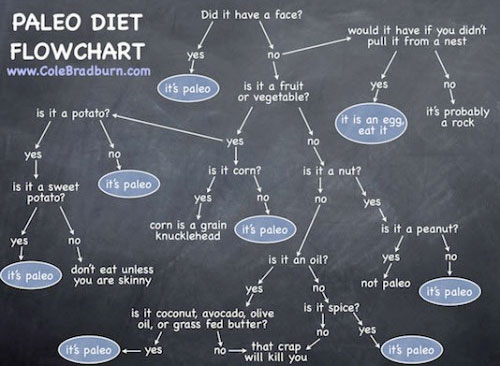
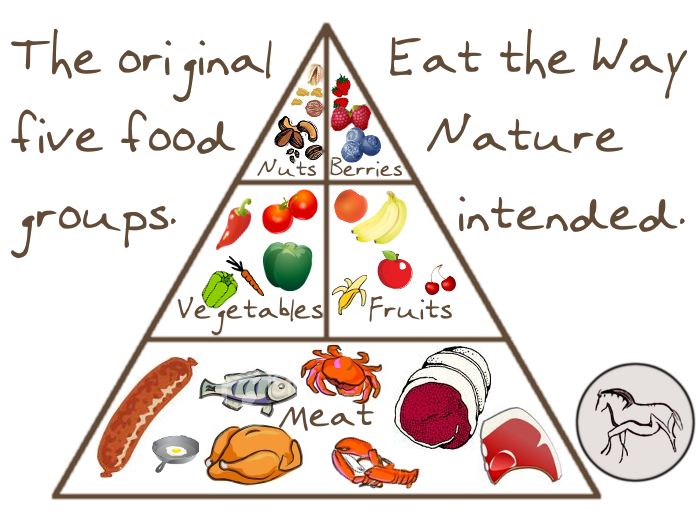
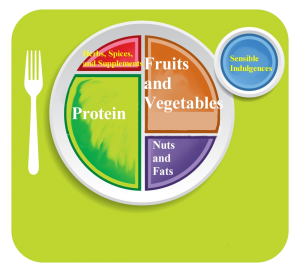
Here are a couple easy to read Paleo charts and links, that make the Paleo Lifestyle seem a little less overwhelming 🙂

A simple (yet sarcastic) flow chart you can follow with yes or no answers, and interesting insight into the lifestyle: http://www.hivehealthmedia.com/three-simple-steps-to-surviving-the-paleo-diet/

Of course the “whole grain” free pyramid and Sara’s take on the Paleo Lifestyle (look at those fabulous food photos!):http://nourish-and-flourish.net/2012/03/penpals-and-the-paleo-diet/

And a simple graphic of what our plates should look like:It really is not tough, and one thing that I’ve learned through experience is the fewer the ingredients (which makes it easy-peasy!), the more flavorful the dish.